
Homeowner Risk Checklist
When Is a Tree Actually Dangerous?
By James Johnson
A tree can look imperfect for years without being unsafe. Dead twigs, surface roots, moss, and a natural lean are not automatic removal orders.
Risk rises when a defect combines with a target: a cracked union over a bedroom, fresh root movement beside a driveway, or a hanging limb above a play area. The change in the tree matters as much as the defect itself.
Use this checklist to decide whether to monitor, schedule tree trimming, request an arborist assessment, or arrange tree removal.
Changes Worth Taking Seriously
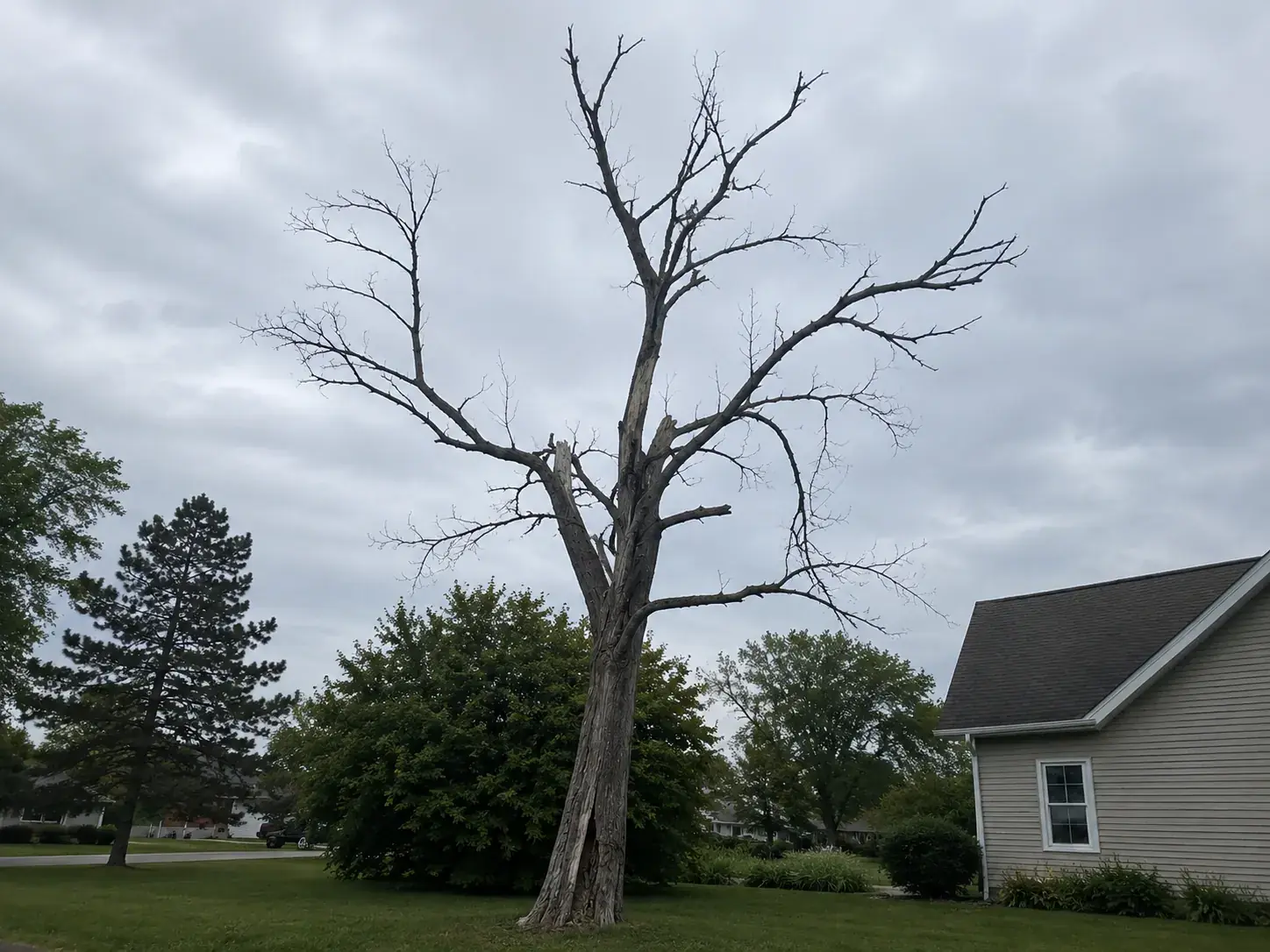
Look for recent movement, progressive decline, and defects aimed at places people or property occupy.
The lean changed recently
A long-standing lean may be normal. Fresh soil cracking, a newly raised root plate, or a trunk that shifted after saturated weather calls for prompt evaluation.
A main union is opening
Vertical cracks where two large stems meet can show that the canopy is separating under load. Included bark and repeated movement make the union more concerning.
Large limbs are dying back
One dead twig is routine; multiple dead scaffold limbs or a thinning top can signal root stress, vascular decline, or structural failure. Pruning may reduce the immediate target while the cause is assessed.
Decay is affecting load-bearing wood
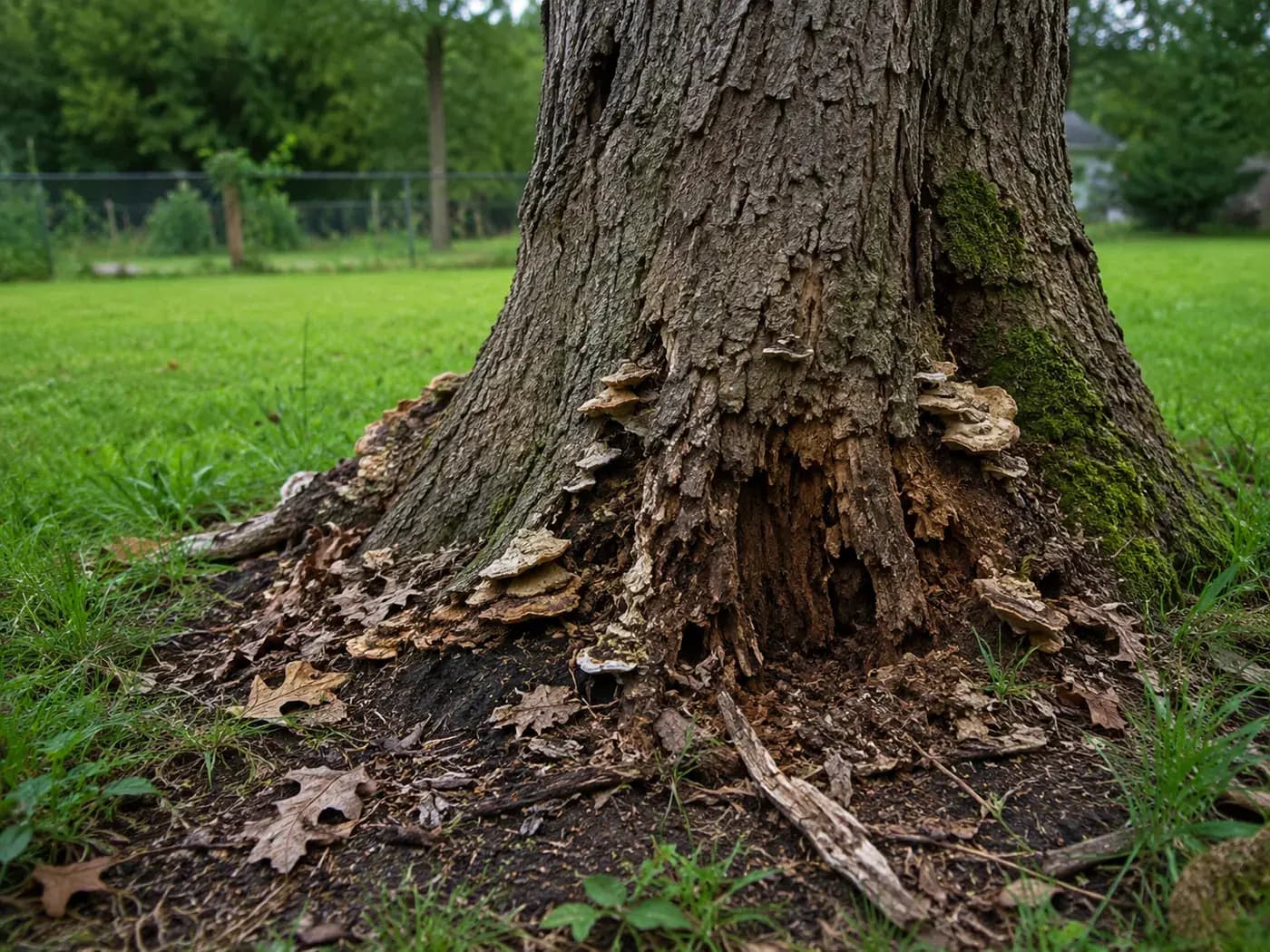
Cavities are not always fatal, but soft wood, fungal conks, expanding cracks, or hollow sections at the base deserve an arborist review.
Storm damage left suspended wood
Twisted hangers and partially attached limbs can release without warning. Keep people away and use emergency tree service when the drop zone cannot be secured.
The tree no longer fits the site
Healthy trees can still conflict with foundations, service lines, roofs, and narrow side yards. Reduction pruning may create clearance; removal is considered when the conflict cannot be managed safely.
Why a Photo Cannot Tell the Whole Story
Photos are excellent for triage, but they flatten lean, hide root movement, and cannot show how wood responds to a sounding or probe.
For a borderline tree, an on-site assessment considers species, soil, wind exposure, targets, and how much sound wood remains around a defect.
The goal is not to sell removal. It is to choose the least disruptive action that brings risk back to a reasonable level.
What to Do While You Decide
Keep people, vehicles, and pets out of the possible drop zone. Do not pull on hanging limbs or climb a compromised tree.
Photograph the entire tree, the trunk base, the defect, and what sits underneath it. Note when you first saw the change and whether a recent storm or construction preceded it.
If there is immediate movement, a tree on a structure, or contact with energized lines, treat it as an emergency. Otherwise, schedule an assessment before the next major weather event.
Tree Hazard Questions
Does a hollow tree always need removal?
No. Some hollow trees retain enough sound outer wood to remain stable for years. Location, opening size, species, canopy load, and remaining shell thickness all affect the recommendation.
Is a leaning tree automatically dangerous?
A stable, long-standing lean is different from recent movement. Fresh soil lifting, new cracks, or a lean that increased after rain or wind deserves prompt attention.
Can pruning make a risky tree safe?
Sometimes. Removing deadwood or reducing weight from an overextended limb can lower risk substantially. Root failure, severe trunk decay, and splitting main stems may not be correctable with pruning.
Who should I call if a tree touches a power line?
Stay away and contact Duke Energy or the appropriate utility first. Do not approach the tree or attempt cutting until the line is confirmed safe.
Keep reading
Related guides & services
Useful next steps from Charlotte Tree Co. across Charlotte.
Get a Second Set of Eyes on the Tree
Share clear photos and the changes you have noticed through our Instant Estimate.
We'll help determine whether the next step is monitoring, professional pruning, an assessment, or removal.